
2026-09-16 ·
Removing Rodent Nests from Crawl Spaces
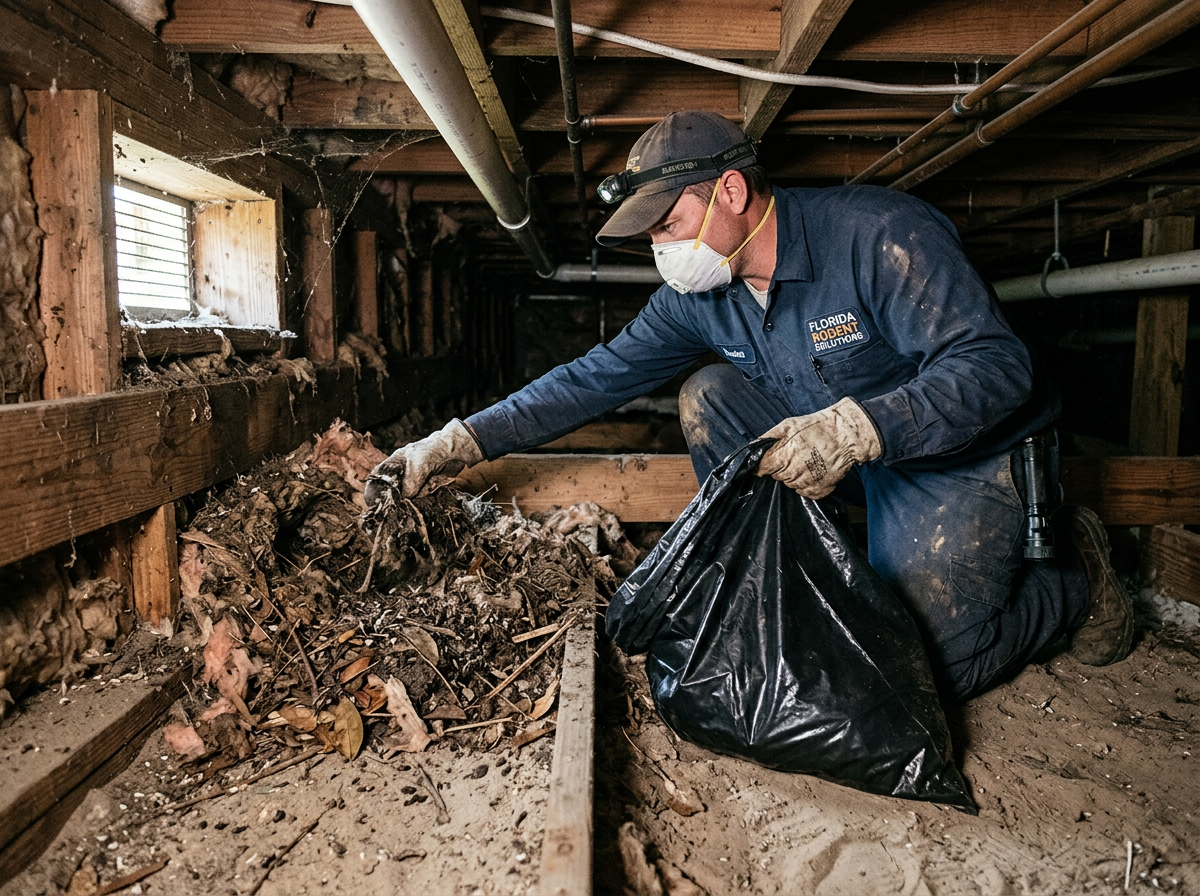
Roof rats reach crawl spaces through 1/2-inch gaps around pipes, vents, and foundation cracks. Once inside they build nests from insulation and debris, producing 4-6 litters per year. Odour from a dead rodent usually appears within 3 days and lingers until the carcass is removed. The first step is a systematic inspection that locates active nests and every opening larger than 1/2 inch.
Locating Nests and Entry Points
Begin at the exterior and look for gnaw marks on wood, grease trails along foundation walls, and droppings the size of rice grains. Inside the crawl space use a headlamp to scan joists, ductwork, and soil for shredded material piled into nests. Track rodent droppings to find entry points by following the heaviest concentrations back to the perimeter. Common access points in Bartow homes include dryer vents, plumbing penetrations, and gaps where the sill plate meets the concrete. Note any soft spots in insulation that indicate nesting activity. Measure each opening; roof rats squeeze through anything 1/2 inch or larger, so mark every defect for sealing later.
Safe Nest Removal Steps
Wear gloves, a respirator, and disposable coveralls before disturbing material. Remove the nest by hand or with a shop vacuum fitted with a HEPA filter, placing all debris into sealed bags for disposal. Scrape remaining droppings and urine from joists with a putty knife, then wipe surfaces with a detergent solution. Allow the area to dry completely before replacing insulation. Work in sections so you can confirm no live rodents remain before closing access. If the crawl space contains extensive contamination, the job often takes several hours spread over two visits to avoid stirring up dust.
Sealing the Crawl Space
After nests are gone, close every 1/2-inch gap with 1/4-inch hardware cloth or metal flashing. Stuff larger holes with steel wool first, then cover with the mesh and secure it with screws or construction adhesive. Pay special attention to pipe entries and vent boots where roof rats commonly travel. Install a door sweep on any crawl-space access hatch and replace damaged vent screens. These steps prevent new rodents from entering while the structure is still warm and attractive. Homeowners in Bartow who complete this sealing work report fewer re-infestations during the rainy season when rats seek dry shelter.
Preventing Re-Entry Through Landscaping
Trim tree limbs and palm fronds back at least 6 feet from the roofline so rats cannot use them as bridges. Remove dense ground cover and stacked firewood within 18 inches of the foundation. Keep gutters clear so water does not pool near the crawl-space vents. These maintenance tasks reduce the number of rodents that reach the home in the first place. When combined with the 1/4-inch mesh barriers, the property becomes far less inviting for new roof rat colonies.
For properties that already show repeated activity, professional inspection through rodent control and rodent exclusion and sealing can identify hidden routes that homeowners miss. Similar sanitation techniques appear in the post Checking for Rodent Damage in Attic Insulation, which covers parallel cleanup steps above the living space.