
2026-09-16 ·
Checking for Rodent Damage in Attic Insulation
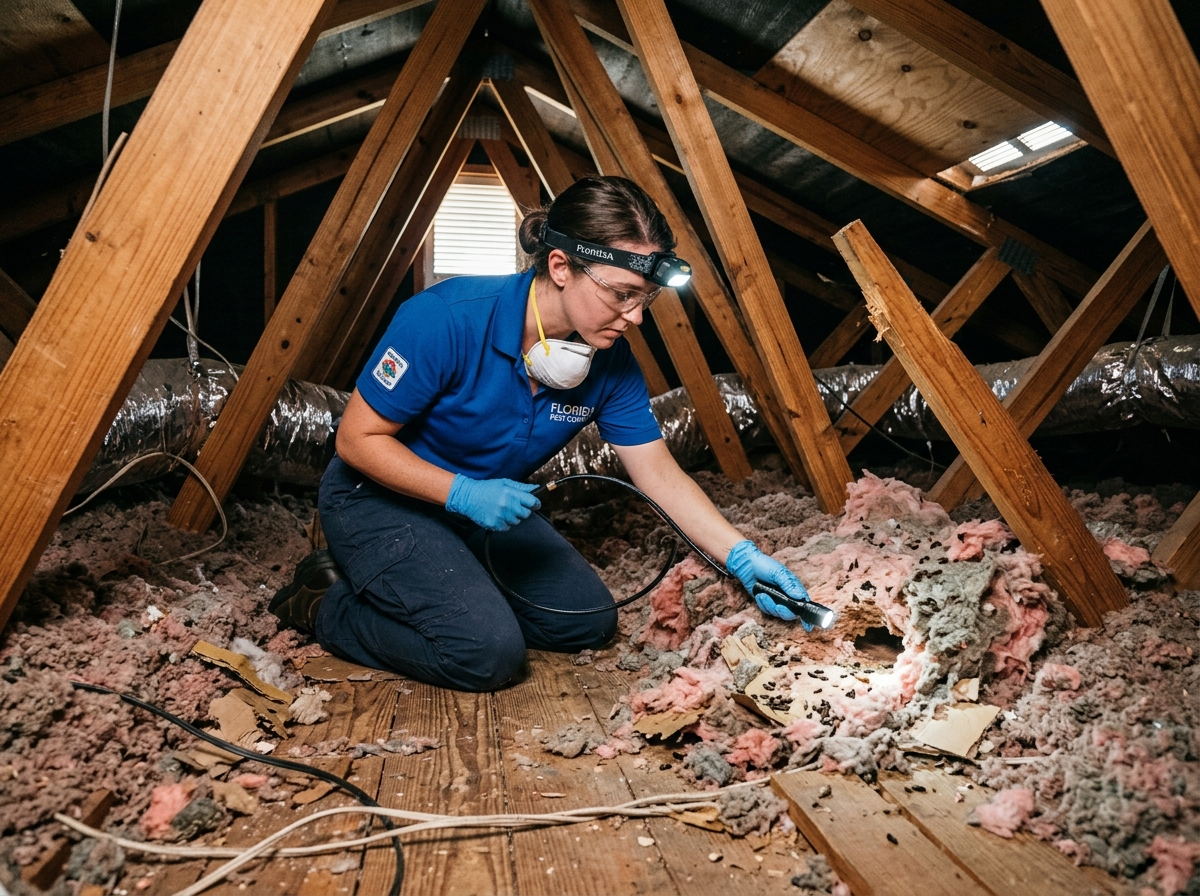
Roof rats in Florida attics damage insulation through nesting and foraging, often within days of entry via gaps as small as 1/2 inch. Homeowners in Bartow can start by examining insulation for displaced sections, dark urine stains and scattered droppings measuring 1/4 to 1/2 inch long. These indicators appear quickly because roof rats do not experience winter die-off and remain active year-round in the state's climate.
Spotting Droppings and Urine Stains
Roof rats produce 40 to 50 droppings per day, concentrating them along insulation edges and near soffits where they travel from palm fronds or oak branches. Fresh droppings appear dark and moist while older ones dry and crumble easily. Urine stains show as yellowish or brownish patches that darken insulation fibers over time. In Bartow homes, these marks often cluster near barrel-tile voids because roof rats follow consistent pathways from the roofline. Checking with a bright flashlight from the access point reveals these patterns without disturbing the material further. Once identified, the affected insulation requires removal to prevent ongoing odor issues that develop within 3 to 5 days after a rodent dies in a wall cavity.
Checking for Gnaw Marks and Nesting
Rodents chew insulation edges and nearby wood to maintain pathways, leaving parallel tooth marks spaced about 1/8 inch apart. Look for shredded fiberglass or cellulose piled into loose nests measuring 6 to 12 inches across, often containing shredded paper or plant debris from nearby trees. In Florida attics, these nests sit in the warmest spots near vent boots where heat builds quickly. Homeowners should note any insulation that appears compressed or missing in linear trails leading to soffits. Such damage reduces the material's R-value and allows further entry. For detailed attic inspection steps tailored to Florida conditions, see the guide on signs of mice in attics during Florida's rainy season.
Addressing Odor from Dead Rodents
When a roof rat dies inside insulation or a wall, decomposition produces a strong odor that intensifies with attic heat common in Bartow summers. The smell typically emerges 2 to 4 days after death and lingers until the body is removed. Homeowners notice it strongest near the access hatch or through ceiling registers. Insulation around the carcass becomes contaminated with fluids and must be cut out in sections. This step pairs with full attic cleanup and sanitation because partial removal leaves residue that attracts new rodents. Florida's lack of cold weather means odors persist longer without natural ventilation from seasonal changes.
Evaluating Entry Points and Prevention
Roof rats reach attics through 1/2 inch gaps in soffits, vent boots and barrel-tile openings after traveling along oak canopies or palm fronds. Trimming vegetation back 6 feet from the roofline blocks these routes effectively. Hardware cloth with 1/4 inch mesh seals larger openings once gaps are identified. In Polk County homes, checking these areas during routine attic visits catches problems before insulation damage expands. Roof rats produce 4 to 6 litters per year, so early detection limits population growth inside the structure. For targeted exclusion work on roof rats, review the details at roof rat control. Regular checks also connect to broader rodent control practices that focus on sealing rather than repeated baiting.