
2026-09-16 ·
Managing Rodents Around Lakefront Properties in Polk County
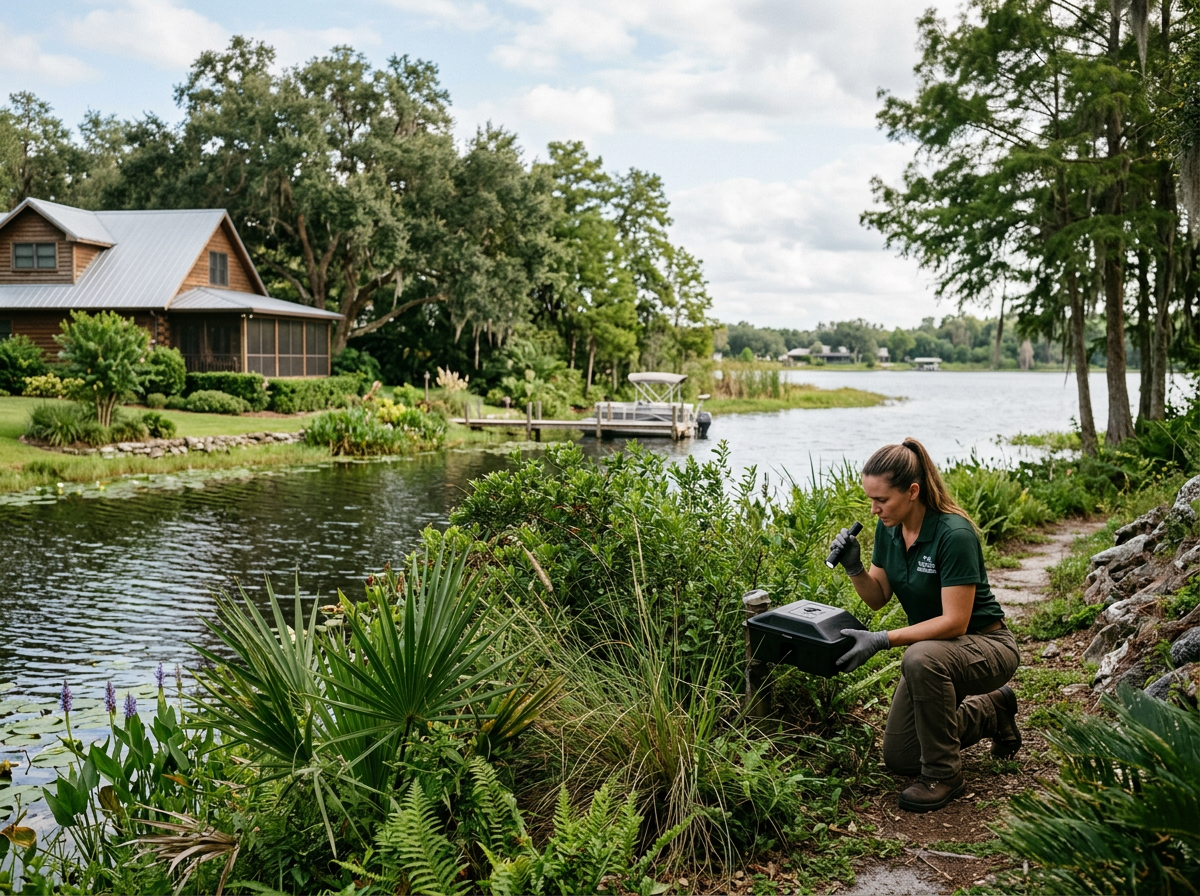
Lakefront properties in Polk County require trimming all tree and palm branches at least 6 feet from the roofline to cut off the main travel routes roof rats use from nearby water edges. These rodents routinely cross from oaks and palms into soffits, barrel-tile voids, and vent boots because the canopy provides cover and direct access. Once branches are cleared, the next step is closing every gap larger than 1/2 inch with 1/4 inch hardware cloth or metal flashing so new arrivals cannot enter. This combination addresses the constant Florida pressure where roof rats produce up to 5 litters per year without a winter die-off to reduce numbers.
Trimming Vegetation on Lakefront Lots
Dense growth along Polk County shorelines gives roof rats protected pathways straight to homes. Cutting branches and fronds back 6 feet stops them from using the canopy as a bridge. Regular checks after storms are needed because wind can push new growth closer to the roof within weeks. Lakefront owners who maintain this clearance see fewer roof rat sightings inside attics compared with properties where palms touch the eaves. The work also reduces the chance of rodents dropping from overhead into soffit openings or tile gaps.
Sealing Entry Points Common on Polk County Homes
After vegetation is cut back, every opening larger than 1/2 inch must be closed. Roof rats fit through holes the size of a quarter and exploit soffits, vent boots, and gaps under barrel tiles. 1/4 inch hardware cloth works well because it is sturdy enough to last in Florida weather while blocking access. Properties near water often have older soffit vents that need full replacement rather than simple patching. Sealing these points prevents new rats from entering even when food sources remain available outdoors. See the details in Sealing Entry Points on Older Bartow Homes.
Why Exclusion Works Better Than Baiting Alone
Bait stations alone leave the entry routes open so new roof rats quickly replace any removed. Exclusion focuses on the 1/2 inch gaps and overhead access that lakefront homes provide. Once sealed, the existing population can be removed without constant reinvasion. Florida conditions make this approach essential because there is no cold period to reduce breeding. Homeowners who combine trimming with full exclusion notice fewer signs inside the attic over time. Full details appear on the Rodent Exclusion and Sealing page.
Handling Insulation and Odour Issues
When a rodent dies inside a wall or attic, odour usually appears within 3 days and can last for weeks. Contaminated insulation holds droppings and urine that continue to create smells and attract new rodents. Removing and replacing the affected material stops the cycle and restores proper attic function. Lakefront homes with repeated access often need larger sanitation work because multiple entry points allow ongoing activity. Checking for damage early prevents small problems from requiring full attic replacement. Read more in Checking for Rodent Damage in Attic Insulation.
Keeping Lakefront Properties Rodent-Free Year Round
Ongoing prevention means quarterly checks of the 6-foot clearance zone and inspection of all sealed areas after heavy rains. Roof rat control on Polk County lakefront lots stays effective when vegetation is kept back and hardware cloth remains intact. Properties that follow these steps report fewer attic intrusions than those relying only on periodic baiting. Consistent attention to the specific entry points created by water-edge growth keeps the problem from returning.