
2026-09-16 ·
Winter Rodent Activity in Central Florida Homes
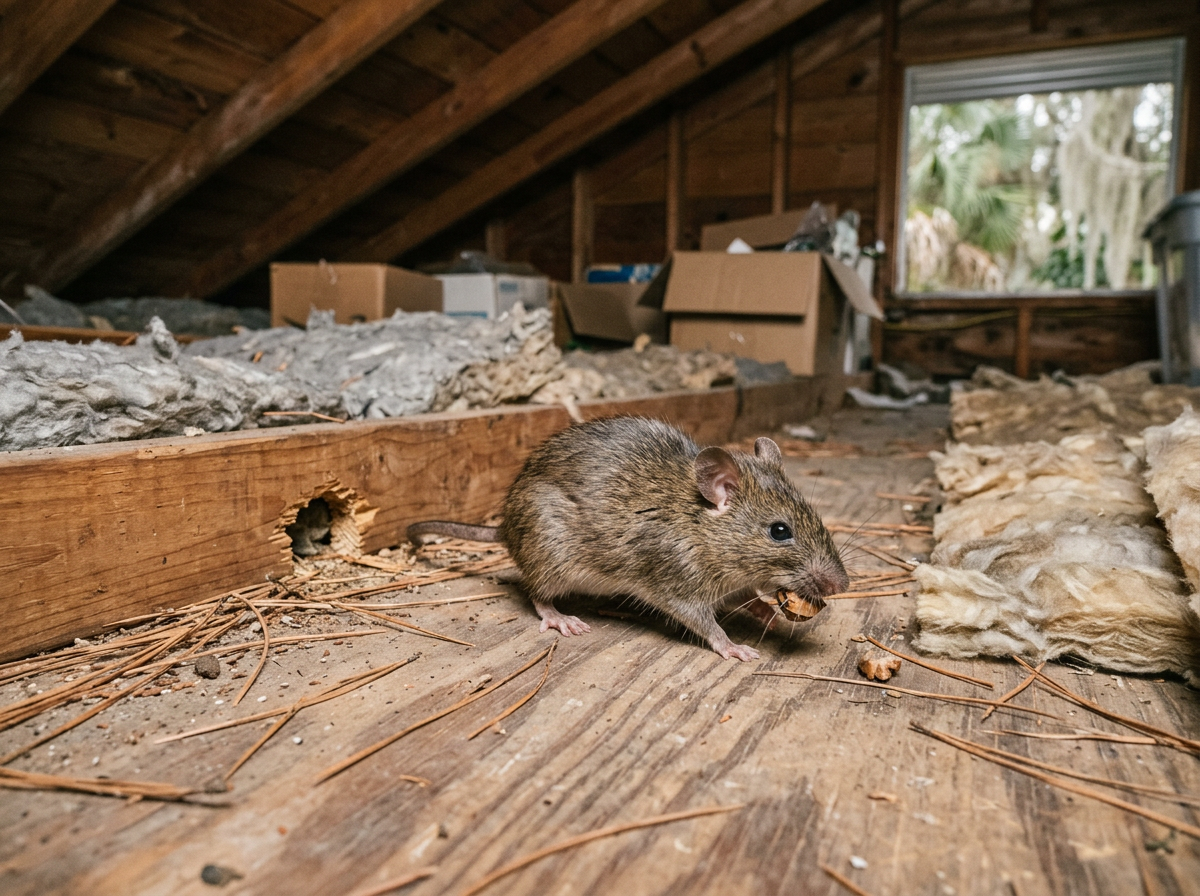
Central Florida homes experience consistent roof rat activity throughout winter because temperatures rarely drop low enough to limit movement or cause die-off. Roof rats remain active searching for food and shelter, often entering structures via overhead routes when daytime highs stay in the 70s and nights cool only to the 50s.
Why Activity Continues Year-Round
Mild winters allow roof rats to maintain normal foraging and nesting patterns without the population reductions seen farther north. Females produce 4-6 litters per year, and young reach breeding age quickly, sustaining pressure on homes even when residents expect a seasonal lull. Without cold weather forcing rodents outdoors or reducing reproduction, entry points that go unaddressed lead to ongoing attic use. Homeowners in Bartow and surrounding areas notice increased signs during drier months when natural food sources become scarcer and structures offer reliable warmth.
Common Overhead Entry Points
Roof rats reach attics by traveling through oak canopies and palm fronds that touch or overhang the roofline. They slip through soffit gaps as small as 1/2 inch, barrel-tile voids, and loose vent boots where flashing has pulled away. These access routes stay open because winter rains and wind do not freeze or expand materials enough to close them naturally. Once inside, rodents contaminate insulation and leave droppings along rafters, creating sanitation needs that require targeted removal rather than simple bait placement.
Odour and Heat Issues from Dead Rodents
When a rodent dies inside a wall or attic space, odour typically develops within three days as decomposition begins in the warm Florida climate. Attic heat accelerates the process, drawing attention through vents or ceiling fixtures before the source is located. Exclusion work prevents new entries so that any remaining animals can be addressed without repeated deaths in hidden voids. Rodent exclusion and sealing focuses on closing these gaps permanently instead of relying on bait that leaves carcasses behind.
Trimming as Primary Prevention
Cutting tree branches and palm fronds back at least 6 feet from the roofline removes the main travel paths roof rats use to reach soffits and tiles. Regular trimming also reduces the chance of fronds dropping debris that clogs gutters and creates additional cover near the structure. This step addresses the root cause of overhead access in Central Florida where live oaks and sabal palms grow close to many homes. Property owners who maintain this clearance see fewer new infestations compared with those who only trap or bait after entry occurs.
Sealing and Sanitation Steps
Install 1/4 inch hardware cloth over soffit openings, vent boots, and tile gaps after trimming is complete. This mesh size blocks roof rats while allowing airflow. Follow with attic cleanup and sanitation to remove contaminated insulation and droppings that attract new rodents. Roof rat control services address both the entry points and the resulting mess in one coordinated effort. Readers interested in related seasonal patterns can review signs of mice in attics during Florida's rainy season for comparison with winter conditions.