
2026-09-16 ·
Rodent-Proofing Chicken Coops and Sheds in Rural Bartow
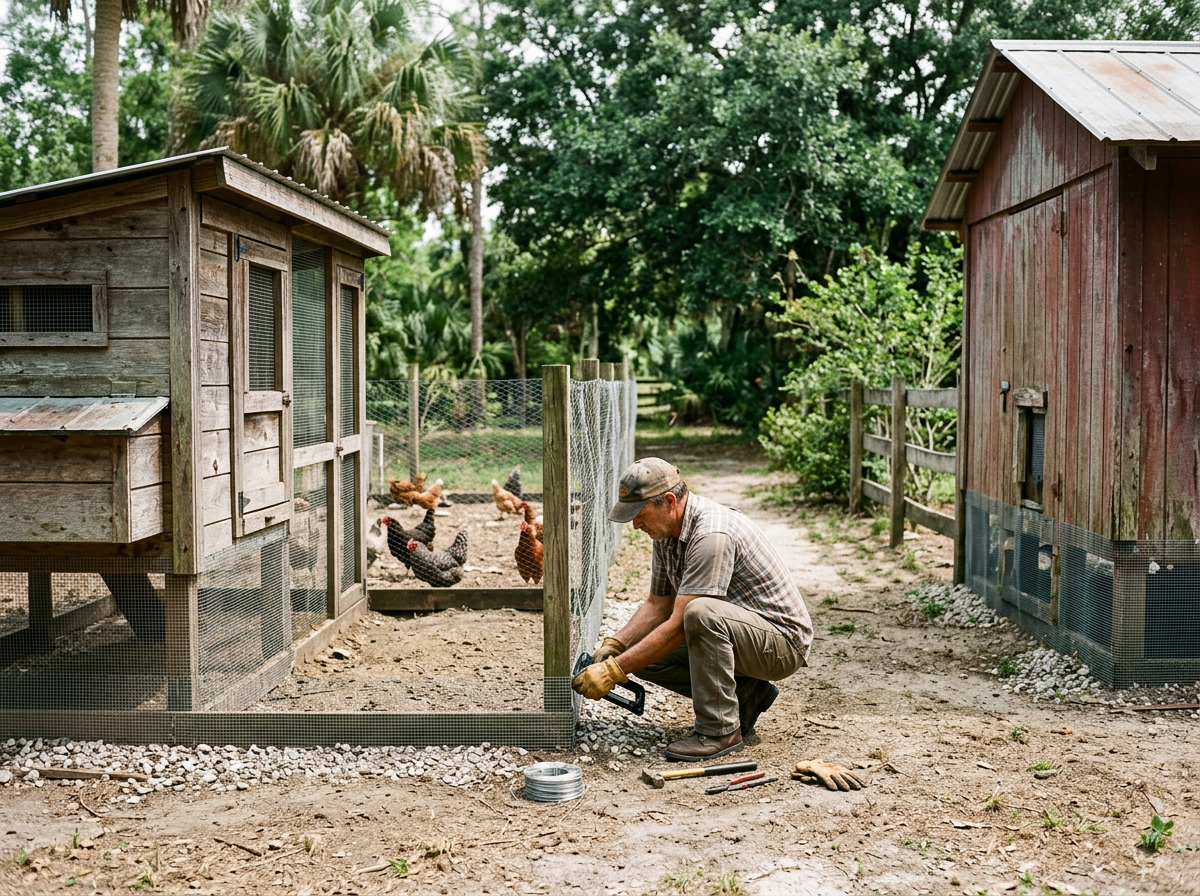
Rodent-proofing chicken coops and sheds in rural Bartow begins with sealing every opening larger than 1/2 inch and covering vents and floors with 1/4-inch hardware cloth while keeping tree branches trimmed at least 6 feet from rooflines. Roof rats move easily through oak canopies and palm fronds that overhang rural structures, and they exploit soffit gaps or loose barrel-tile voids without any winter die-off to reduce numbers. These steps keep rodents out of feed storage and nesting areas where insulation quickly becomes contaminated.
Identifying Common Entry Points in Bartow Coops
Rural Bartow properties often feature wooden coops and metal sheds set near live oaks and citrus trees that provide direct pathways for roof rats. Inspect the base where soil meets wood for gaps created by settling, check door frames for warping that leaves 1/2-inch spaces, and examine roof vents or ridge caps that rats enlarge over time. Walk around the structure at dusk to watch for movement along utility lines or fence posts that connect to the building. Once entry points are mapped, prioritize fixes that address the largest openings first because a single unsealed hole allows repeated access even after other areas are secured.
Applying Hardware Cloth and Sealants
Attach 1/4-inch hardware cloth to the underside of coop floors and around all ventilation openings so rats cannot chew through softer materials. Bend the cloth outward at ground level to create an apron that stops burrowing, then secure it with screws and washers every 4 inches along the perimeter. Fill larger voids around pipes or conduit with expanding foam followed by a layer of steel wool before applying exterior caulk rated for Florida humidity. These barriers remain effective year-round because roof rats stay active without seasonal population drops. Check the mesh periodically for tears caused by livestock or weather and repair immediately to maintain the seal.
Managing Vegetation and Feed Storage
Trim oak and palm branches back at least 6 feet from coop and shed roofs to remove the canopy routes roof rats use to reach Bartow structures. Store chicken feed in metal containers with tight lids rather than open bags that attract rodents from surrounding fields. Elevate waterers on stands so spills do not create moist harborage near foundations. Move stacked lumber or equipment at least 18 inches away from walls to eliminate hiding spots and allow inspection of the siding. These practices reduce the resources that support repeated infestations in rural settings where natural cover is abundant.
Monitoring and Maintenance After Initial Work
Place tracking patches of flour or baby powder near repaired openings and check them weekly for fresh prints that signal new activity. Replace any damaged hardware cloth sections before they widen beyond 1/4 inch. Keep records of sightings and locations so patterns become clear over multiple seasons. When signs persist despite these measures, professional rodent control can locate hidden entry routes that property owners miss. For permanent exclusion work on larger sheds, rodent exclusion and sealing services provide targeted repairs matched to Florida roof rat behavior. Readers managing multiple outbuildings may also review the DIY trap placement guide for Bartow sheds to supplement physical barriers with monitoring tools.