
2026-09-16 ·
Keeping Rats Out of Garages After Hurricane Season
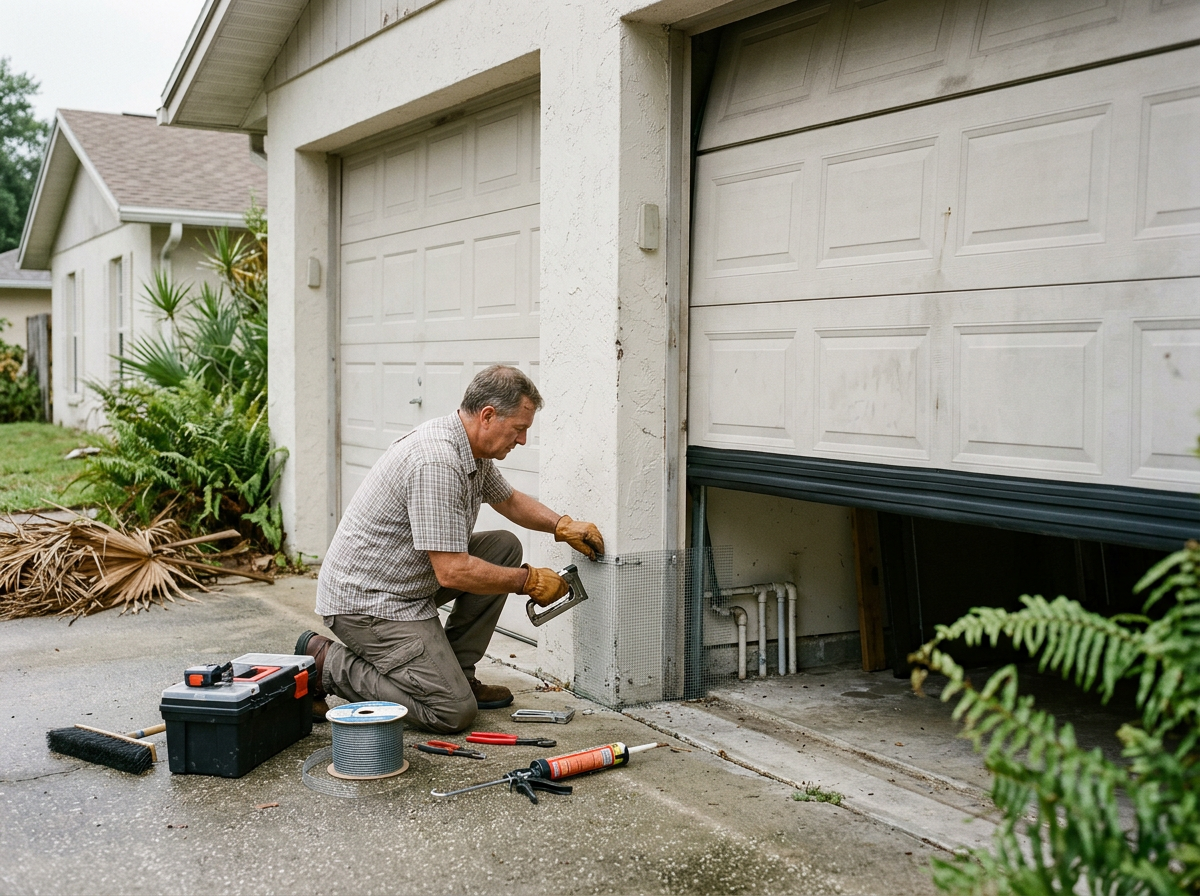
Rats can enter garages through gaps as small as 1/2 inch that storms widen or create in soffits, vents, and door frames, so inspect and seal those openings first with 1/4-inch hardware cloth within days of the hurricane passing.
Checking Storm Damage for Rat Entry Points
After a hurricane, examine garage doors, side walls, and roof edges for new cracks or displaced flashing where wind-driven debris hit. Roof rats often follow palm fronds or oak limbs that fall against structures and then use those contact points to reach soffits. Check vent boots and barrel-tile voids that may have shifted, since these provide overhead routes into the space above the garage. Walk the perimeter at dusk to spot movement along the foundation where water pooled and loosened soil. Note any areas where insulation or stored items show fresh gnaw marks or droppings, which indicate immediate activity. Document damage with photos before repairs begin so you can prioritize the largest openings first.
Sealing Gaps and Vents Effectively
Use 1/4-inch hardware cloth to cover any opening larger than 1/2 inch around pipes, electrical entries, and dryer vents that storms may have loosened. Attach the mesh with screws and washers rather than staples so it stays secure during future high winds. Replace damaged weather stripping on garage doors and add metal thresholds where rodents could slip underneath. For soffit sections pulled away from the fascia, secure new panels with exterior screws and caulk the seams. These steps block the common post-storm routes roof rats use to reach attics and then drop into garages. Rodent exclusion and sealing details the materials that hold up in Florida humidity.
Trimming Trees and Palms Near the Roofline
Cut oak branches and palm fronds back at least 6 feet from the garage roof edge so rats lose their overhead highway after storms knock limbs into new positions. Remove any fallen debris piles within 10 feet of the building that could serve as temporary shelter. Focus on the south and east sides where prevailing winds during hurricanes often push vegetation against structures. Regular trimming prevents the canopy contact that lets roof rats bypass ground-level barriers entirely. Keep gutters clear of fronds so water does not create new damp entry points along the eaves.
Sanitation and Monitoring After Cleanup
Remove wet cardboard, insulation scraps, and food packaging that hurricanes scatter inside garages, since these become nesting material within days. Store pet food and bird seed in metal cans with tight lids. Set snap traps along walls where droppings appear rather than relying on bait that can leave odor problems if a rodent dies inside a wall. Check traps every morning for the first two weeks and reset as needed. Roof rat control explains how exclusion outperforms baiting when there is no winter die-off in Florida. Watch for signs such as gnawed wires or grease marks along rafters that show ongoing traffic.
Connecting Garage Work to Whole-House Protection
Once the garage is sealed, review the rest of the structure for similar storm damage that could let roof rats move from the garage into living spaces. Attic insulation contaminated by droppings needs removal before odors develop, which can occur in as little as 3 days in Florida heat. Attic cleanup and sanitation covers the process for handling that material safely. Continue trimming vegetation around the entire property and recheck seals after the next heavy rain. These habits keep rodents from establishing litters that can number 4-6 per year in the state.